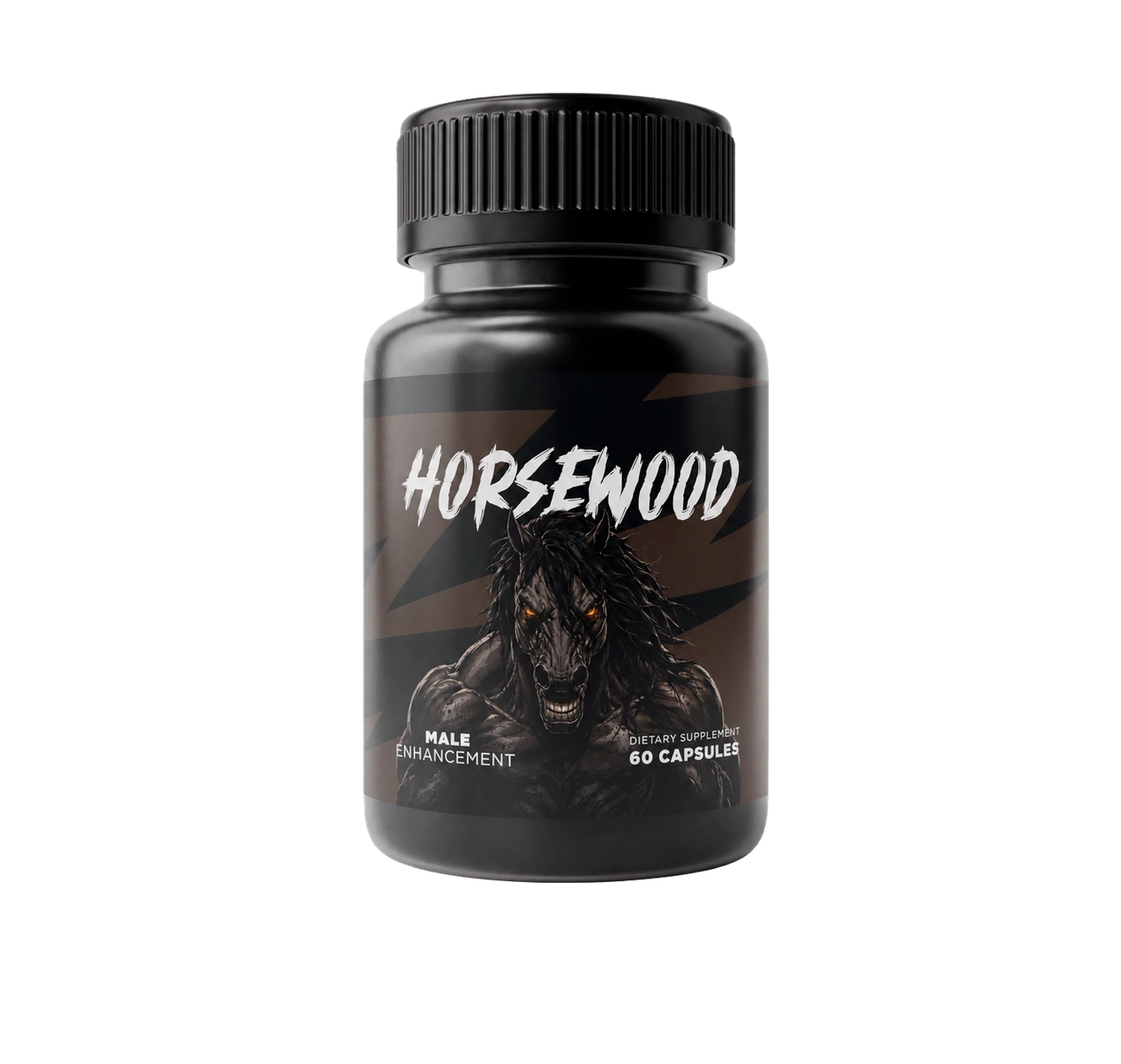
Horsewood Benefits for Men's Everyday Wellness
Six areas, each explained at length with the limits stated. A dietary supplement supports a routine — it does not replace one, and it does not treat anything.
How to Read the Horsewood Benefit Claims
Before the list, a framing we think matters more than any individual item on it. The language used throughout this page — supports, may support, designed to support, helps maintain, traditionally used — is not legal hedging bolted on afterwards. It is an accurate description of what a nutritional product does.
A supplement contributes to a system that is already running. If the underlying system is in poor repair, an input at the margin will not fix it, and no amount of confident marketing changes that. The men who get most from a product like this tend to be those whose sleep, training and food are already reasonable and who are looking for something at the edges. If that is not you yet, the edges are not where your attention belongs.
One more thing worth stating up front. Because Horsewood publishes its amounts, we can tell you that total active content is around 118 mg per serving — modest against the doses used in much published research. That context applies to every section below.
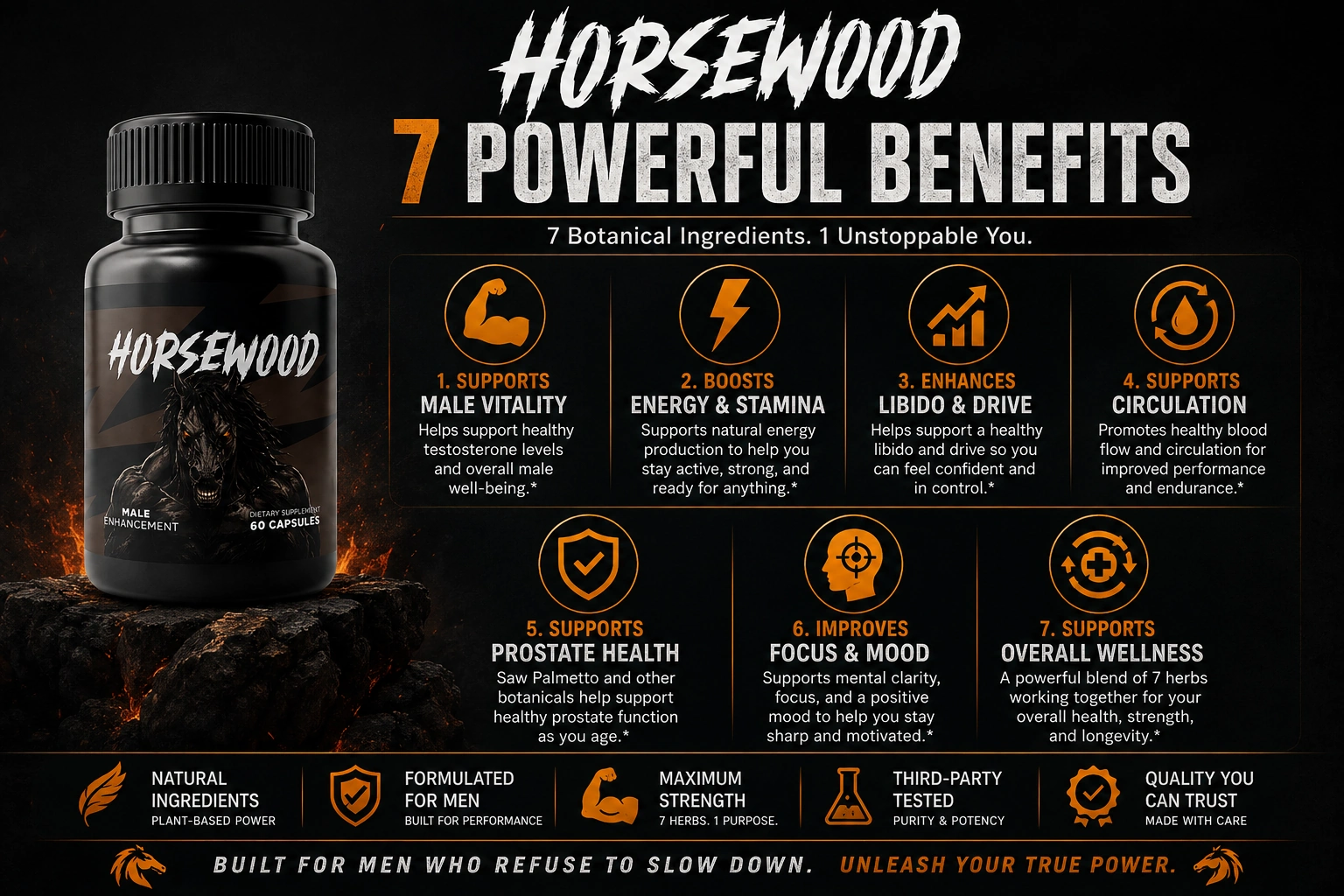
Manufacturer artwork. The sections below set out each area in our own words, with the labelled amounts and the limits of the evidence.
Horsewood and Daily Energy
This is why most men look at the category at all. The complaint is rarely dramatic — not exhaustion, just a sense that the reserve which used to be there has thinned. Afternoons take more effort. The evening after work has less in it.
Horsewood is positioned to support everyday energy as part of a healthy lifestyle, through nutritional rather than stimulant means. Tongkat ali is the ingredient most connected to this area, with research examining its relationship to stress markers and physical performance in active adults.
The distinction that matters is between energy support and stimulation. A stimulant borrows against later by interfering with the signals telling you to rest. It works, it is immediate, and it comes with a bill. Nutritional support does not operate that way, which also means there is no arrival moment to feel.
The limit. If you sleep six hours a night, that is your energy problem and no capsule has an answer to it. Our piece on sleep and daily energy is a better use of your time than this section.
Horsewood for Stamina and Endurance
Tongkat ali carries this part of the formula, and the extract specification is worth understanding properly. The label lists 10 mg — a figure that looks small until you read the accompanying note: it is a 100:1 extract, equivalent to roughly 1,000 mg of dry root powder.
That distinction is exactly why extract ratios matter and why we keep pointing at them. A milligram of concentrated extract is not comparable to a milligram of ground herb, and any comparison between products that ignores the ratio is meaningless. Horsewood printing the ratio is a mark in its favour.
Research has examined tongkat ali in relation to muscular strength, endurance and stress hormone markers in physically active adults. Findings are moderately encouraging but limited: sample sizes are small, durations short, and extract standardisation varies enormously between suppliers, which makes results hard to transfer from one product to another.
The full tongkat ali page goes through the research in more detail, including where it falls short.
Horsewood and Men's Vitality
Four ingredients form the traditional core: tongkat ali, horny goat weed, saw palmetto and wild yam. Each arrives from a different herbal tradition — Southeast Asian, East Asian, southeastern North American and North American woodland respectively — and each has a documented history of use in men's preparations going back generations.
Horny goat weed is the one most people recognise by name, largely because of the name. Its compound of interest is icariin, a flavonoid that has attracted laboratory attention in connection with circulation and blood vessel function.
Here is where we part company with most of this industry. Traditional use is a legitimate reason to investigate a plant — a great many modern medicines began precisely there. It is not, by itself, evidence that something works, and the two get deliberately conflated in supplement marketing all the time.
For horny goat weed specifically, human research remains considerably thinner than the volume of marketing built on top of it. Most work has been laboratory or animal based. That does not make it worthless; it makes the honest description "traditionally used and under investigation" rather than "clinically proven".
Read the individual pages for horny goat weed and wild yam, where we go through what is and is not established.
Horsewood and Healthy Circulation
Safety note worth reading. Horny goat weed has been associated with effects on blood pressure and may interact with medication for blood pressure or the heart. If either applies to you, speak to your doctor before taking this or any product containing it.
Circulation is the delivery infrastructure for everything else the body does. Oxygen, nutrients, hormones and the raw materials of tissue repair all travel the same route, and how efficiently they move affects how exertion and recovery feel.
Icariin, from horny goat weed, is the ingredient studied most directly in this context. Laboratory work has examined its relationship to nitric oxide signalling and blood vessel function, which is the same broad pathway targeted by a great many products in this category.
Two things to hold in mind. Laboratory findings do not automatically translate into effects in a living human at a supplement dose, and the amount here is 8 mg of a 10:1 extract. And the larger point stands regardless: circulatory health is shaped far more by blood pressure, aerobic fitness, smoking status and body composition than by anything in a capsule. That is where the leverage sits, and it is free.
Horsewood, Prostate and Urinary Wellness
The area of this formula with the most substantial research literature behind it — and the one where honesty about dose matters most.
Saw palmetto and nettle leaf are the relevant ingredients, both at 20 mg, and they are frequently studied together. Saw palmetto in particular is among the most researched botanicals in men's health, examined extensively in relation to prostate function and lower urinary tract symptoms in older men.
Nettle leaf brings a genuine nutritional profile alongside it — it is eaten as a cooked green across much of Europe and contains vitamin K, iron and calcium.
Now the honest part. The early enthusiasm for saw palmetto came from small trials; larger and better-controlled studies since have generally produced weaker results, and reviews of the literature tend to reach cautious conclusions. The amounts used in that research are also typically far above 20 mg.
Important. This is nutritional support for general wellness, not a treatment for any prostate condition. Saw palmetto and nettle may also affect PSA test results, which matters if you are being screened. Prostate symptoms need a doctor rather than a supplement.
Horsewood, Overall Well-Being and Consistency
The least marketable benefit and the one that determines whether any of the others were worth paying for. A supplement taken sporadically is an expensive way to achieve very little, and sporadic use is the normal outcome rather than the exception.
Everything about the format is arranged around that problem. Two capsules rather than six. No stimulant, so no timing rules. No powder to measure and nothing requiring refrigeration. The design brief is a routine that survives a bad month.
Boron completes the formula at 20 mg — a trace mineral present in fruit, nuts and vegetables, studied in relation to bone health and mineral metabolism.
It also explains why packages are sold in months rather than weeks. Partly that is pricing structure and we would not pretend otherwise. But it also reflects something true: nutritional support operates on a slow timescale, and a fortnight answers nothing.
The counterweight is the 60-day guarantee, which is shorter than the larger packages. Buy six bottles and your decision point arrives at day 60, not day 180 — worth putting in a calendar the day the box arrives.
Why consistency beats intensity covers the habit mechanics, and how Horsewood works covers the practical routine.

The Horsewood 60-Day Money-Back Guarantee
Every Horsewood order is covered for a full 60 days. The published terms are straightforward: if you are not satisfied, send back any remaining bottles — including empty ones — within 60 days and the purchase is refunded.
Worth planning around: the guarantee runs 60 days while the three and six-bottle packages hold 90 and 180 days of product. If you buy six bottles, the decision about whether to keep them needs making well before the supply runs out. Put a reminder in your calendar for around day 50.
Return postage and any handling conditions are set by the seller, not by this site. Read the official refund policy at checkout for the complete terms before ordering.
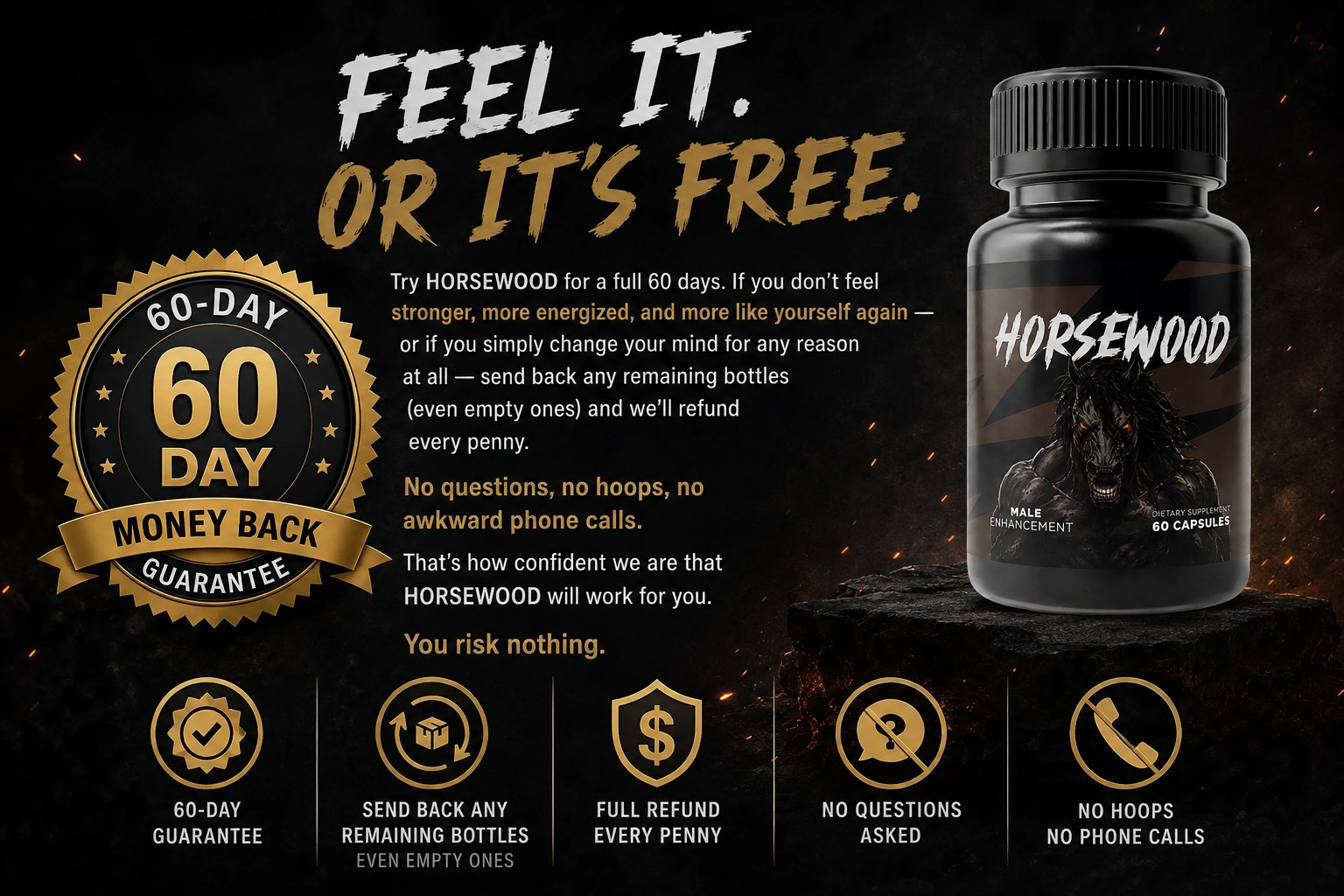
Start Your Horsewood Routine
Horsewood is a daily men's wellness formula built around seven labelled ingredients, taken as two capsules a day. Every package is covered by the 60-day money-back guarantee, and pricing and stock are confirmed on the official checkout.
From $49 per bottle on six · 60-day guarantee · Free US shipping on the six-bottle package